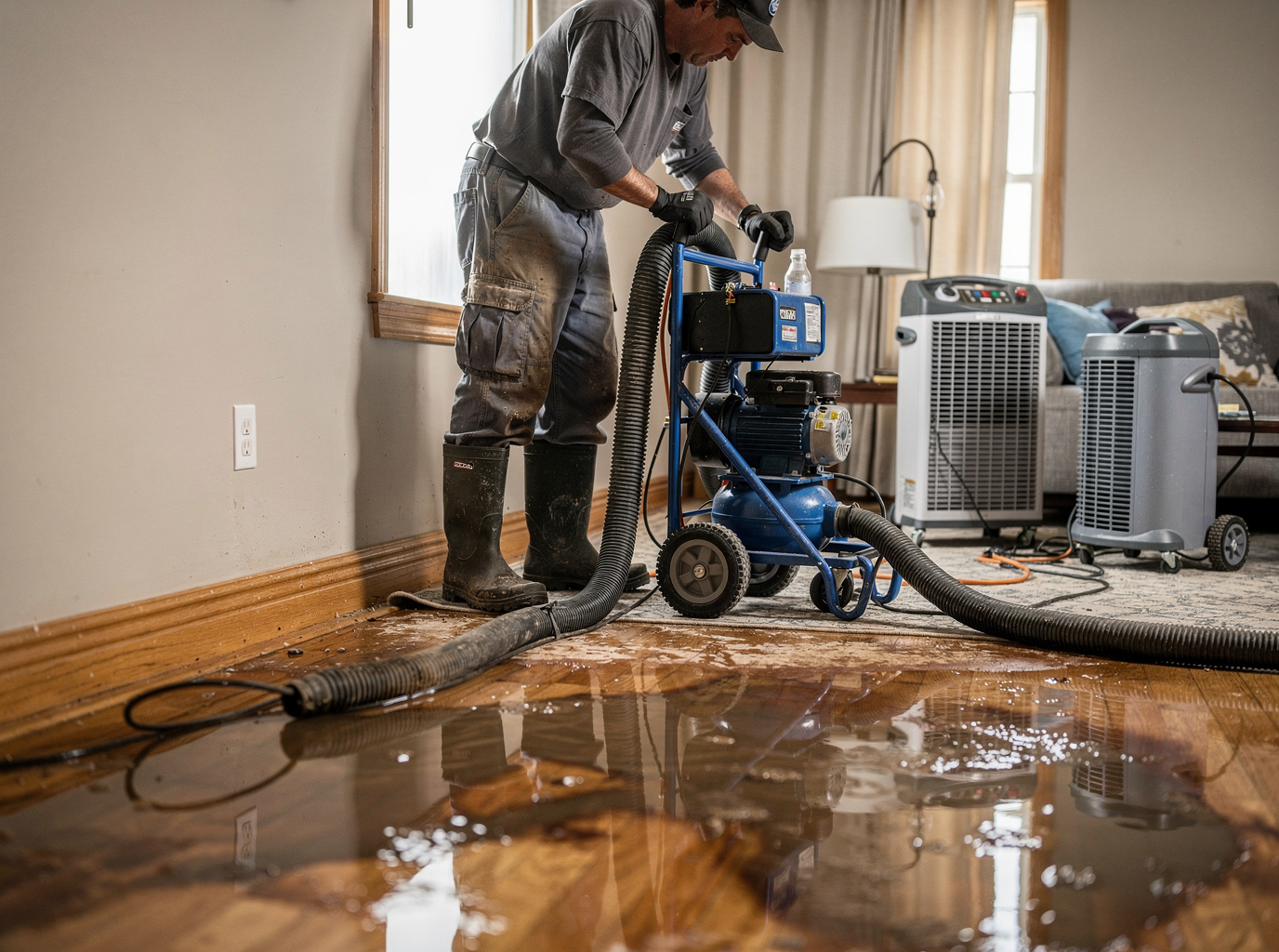
Spokane's older housing stock in neighborhoods like Browne's Addition and Perry District often features balloon framing and knob-and-tube wiring that lets water travel unseen behind plaster walls. When a supply line bursts during a January cold snap, moisture can wick into lath and reach the second floor before homeowners notice. Technicians must open cavities early and use moisture meters on brick foundations common south of the river to prevent hidden mold growth that shows up months later in South Hill basements.
Four distinct seasons drive the workload. Heavy spring runoff from Spokane Falls and the Spokane River can push water into low-lying properties along the Centennial Trail, while summer thunderstorms dump inches in an hour on already saturated ground near Manito Park. Winter freeze-thaw cycles crack galvanized lines in homes built before 1960, and warm summers increase AC condensate backups that saturate crawlspaces in Spokane Valley tract houses. Each season changes extraction equipment needs and drying timelines.
Spokane County building codes require permits when structural members are affected, so restoration crews coordinate with inspectors on jobs that involve joist sistering after prolonged saturation. Homes near the rail lines in East Spokane sometimes sit on clay soils that hold water, extending drying times by days compared to the sandy loam found closer to Cheney. Technicians track dew points daily because the region's low winter humidity can actually help drying once extraction is complete, but only if airflow is managed correctly around tight 1920s floor plans.
Technician insight
In Spokane, the thing that catches most people out with Emergency Water Damage Restoration is how quickly water travels upward through balloon-framed walls in homes built before 1950 during a hard freeze; a small leak in the Perry District can soak second-floor ceilings before anyone notices, and the clay soil around South Hill keeps the ground wet long after extraction, so you have to run drying equipment longer than you would on the sandy lots near Post Falls.
Ice-Dam Leak In Browne's Addition
A homeowner in a 1928 house near Browne's Addition called after meltwater from an ice dam entered the attic. Inspection showed saturated insulation and ceiling joists above the kitchen. Crews removed wet material, ran drying equipment for four days, and replaced insulation and drywall while coordinating with the city on the minor structural repair permit.
Emergency Water Damage Restoration Services We Offer
✓Burst Pipe Water Extraction
Immediate removal of standing water from supply-line failures common in pre-1960 Spokane homes, followed by targeted drying to protect plaster and hardwood floors.
✓Basement Flood Cleanup
Pumping and drying of below-grade spaces after river or stormwater intrusion, especially in South Hill and Perry District properties with older stone foundations.
✓Sewage Backup Remediation
Safe removal and sanitization after municipal line backups that occur during heavy spring rains near Riverfront Park and Downtown Spokane.
✓Attic and Ceiling Drying
Moisture detection and drying of insulation and rafters after ice-dam leaks that form during Spokane's cold, snowy winters.
✓Crawlspace Water Removal
Extraction and dehumidification in vented crawlspaces typical of Spokane Valley and Cheney homes where summer condensate or winter pipe leaks collect.
Emergency Water Damage Restoration Cost in Spokane, WA
| Service | Typical Range | What Affects It |
|---|---|---|
| Initial Assessment And Extraction | $350–$850 | Higher when multiple floors or finished basements are involved |
| Equipment Drying Per Day | $150–$300 | Varies with home age and insulation type |
| Drywall And Insulation Removal | $400–$1,200 | Depends on linear footage opened in plaster versus drywall homes |
| Final Moisture Verification | $150–$250 | Includes written report for insurance |
Ranges are typical for Spokane, WA and confirmed with an exact written quote before any work starts.
How it works
- 1
On-Site Assessment
Technicians arrive from the Trent Avenue location, document moisture levels with meters, and identify affected materials in the specific neighborhood.
- 2
Water Extraction
Standing water is removed using truck-mounted pumps suited to Spokane's variable terrain and soil conditions.
- 3
Drying And Monitoring
Air movers and dehumidifiers run while daily moisture readings track progress through older wall assemblies and foundation types.
- 4
Restoration And Repairs
Damaged drywall, flooring, and insulation are replaced to match existing construction details common in Spokane County homes.
Pricing
Costs depend on water volume, affected square footage, and how many hidden cavities must be opened in older homes.