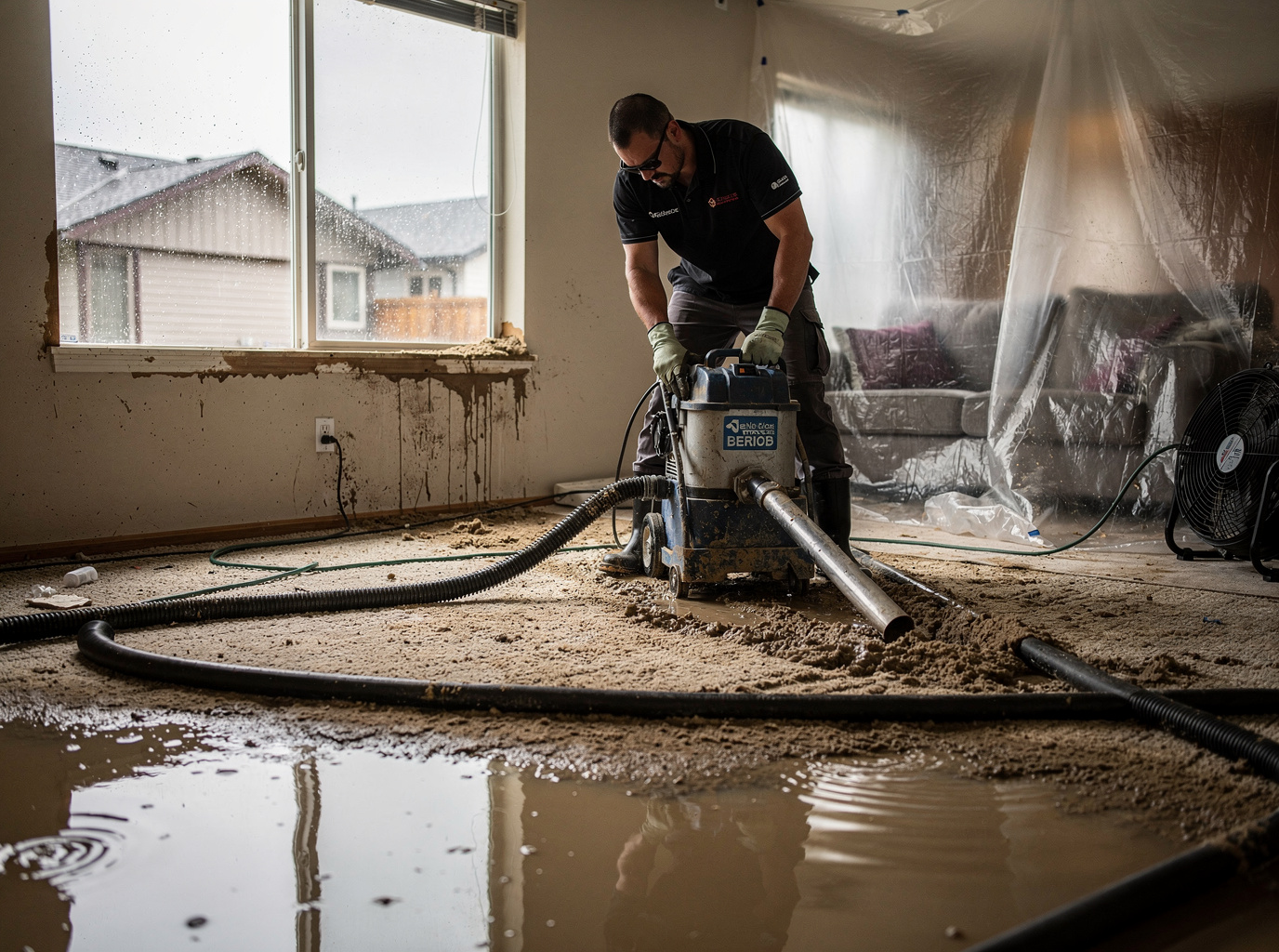
Older housing stock in Browne's Addition and Downtown Spokane often features plaster walls over lath and balloon-framed construction that traps moisture deep behind finishes. When a supply line bursts during a cold snap, water migrates along floor joists into adjacent units or down into finished basements. Technicians must pull baseboards early and use moisture meters on both sides of every wall to locate hidden saturation before mold sets in during the warm summer months that follow.
South Hill homes built on the area's rolling terrain frequently experience runoff during spring snowmelt that pools against foundations. Clay-heavy soils common in Spokane County slow drainage and push water through cracks in older concrete basements. Restoration crews set up air movers and dehumidifiers in staged patterns to pull moisture from these lower levels without pushing humidity into upper floors, especially when warm summer air outside would otherwise cause condensation on cooled surfaces.
Spokane Valley and Cheney properties near the river or Spokane Falls face occasional sewer backups after heavy winter rains overwhelm aging lines. These events require negative-air machines and antimicrobial application on affected subfloors before any drying begins. Crews also check crawl spaces under Perry District bungalows where low clearance makes equipment placement tricky and where missed moisture quickly leads to structural rot in floor joists.
Technician insight
In Spokane, the thing that catches most people out with water damage restoration is how quickly moisture hides inside the plaster-and-lath walls of pre-1940 homes on the South Hill and in Browne's Addition. A pipe burst during a cold January night can travel along floor joists into three rooms before anyone notices, and the clay soil here keeps the ground wet long enough for hidden mold to start once temperatures climb in spring.
South Hill pipe burst after freeze
A supply line froze and split in a 1920s South Hill bungalow, sending water under the hardwood into the finished basement. Crews extracted water, opened walls to reach wet plaster, and ran drying equipment for five days until readings stabilized. The homeowner avoided mold growth and kept the original floors intact.
Water Damage Restoration Services We Offer
✓Basement Flood Extraction
Removes standing water from Spokane County basements after snowmelt or pipe failure, then sets drying equipment to protect joists common in older South Hill homes.
✓Ceiling Leak Repair
Extracts water from ceilings in Downtown Spokane apartments and restores drywall to prevent sagging or mold growth during humid summer months.
✓Winter Pipe Burst Restoration
Handles sudden releases from frozen lines in Browne's Addition and Perry District homes, focusing on hidden moisture behind plaster walls.
✓Carpet and Subfloor Drying
Pulls saturated carpet and pad then dries plywood or hardwood subfloors in Spokane Valley residences before reinstallation or replacement.
✓Sewage Cleanup
Removes contaminated water from backups near Spokane Falls or aging lines and applies treatments to protect occupied spaces in Cheney.
Water Damage Restoration Cost in Spokane, WA
| Service | Typical Range | What Affects It |
|---|---|---|
| Minor leak extraction and drying | $450–$900 | Single room, quick access, no hidden wall saturation |
| Basement flood restoration | $1,200–$3,500 | Standing water depth, number of rooms, and subfloor type |
| Ceiling and wall drying | $600–$1,800 | Plaster versus drywall and extent of migration |
| Sewage cleanup and drying | $1,800–$4,200 | Contamination level and required containment |
Ranges are typical for Spokane, WA and confirmed with an exact written quote before any work starts.
How it works
- 1
On-Site Assessment
Technician inspects affected rooms in the Spokane home, uses moisture meters on walls and floors, and maps the full extent of water migration.
- 2
Water Removal
Pumps and extraction tools clear standing water from basements or living areas, with containment set for any sewage events.
- 3
Drying And Dehumidification
Air movers and commercial dehumidifiers run in patterns suited to the home's construction until readings return to normal.
- 4
Restoration And Monitoring
Replaces damaged materials and returns for follow-up checks to confirm no residual moisture remains before finishes are reinstalled.
Pricing
Upfront quotes after inspection; minor jobs often fall in the low hundreds while full-structure drying runs higher depending on access and materials.