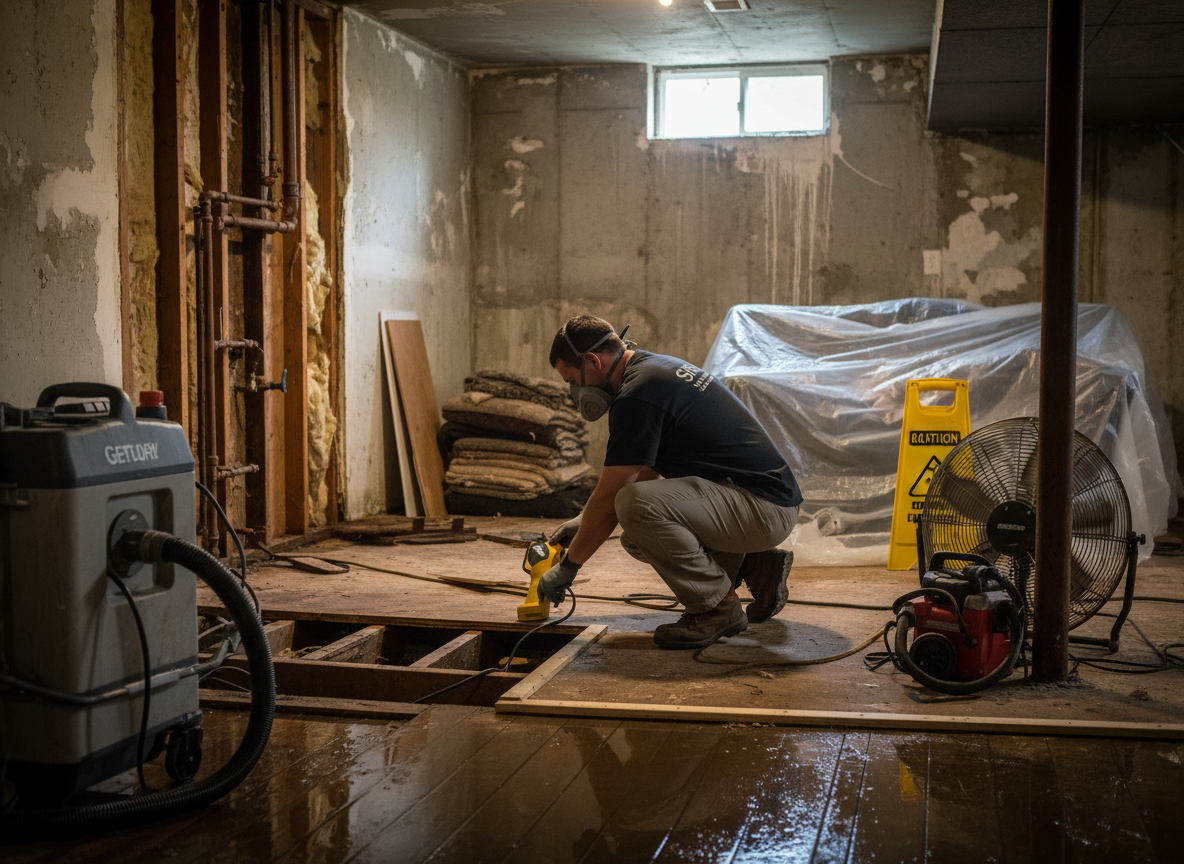
Spokane's older housing stock in neighborhoods like Browne's Addition and Perry District often features plaster walls, balloon framing and crawl spaces that trap moisture after leaks or snow melt. These materials absorb water differently than modern drywall, requiring targeted drying to avoid hidden rot along floor joists. Technicians working from the Trent Avenue base routinely check for hidden saturation in South Hill basements where clay soils hold water against foundations during spring thaw.
Four distinct seasons bring specific challenges. Cold winters with repeated freeze-thaw cycles crack pipes in unheated spaces common in Downtown Spokane apartments and single-family homes. Warm summers increase groundwater pressure around Spokane County properties near the Spokane River, pushing water through foundation seams. Crews adjust extraction methods based on whether the job is in flat riverfront lots or sloped South Hill yards that direct runoff toward structures.
Repair work must account for local building practices in Spokane Valley and Cheney homes, where many basements lack modern vapor barriers. Removing saturated insulation without disturbing knob-and-tube wiring or lead paint in pre-1970s houses requires careful sequencing. Proper drying before reconstruction prevents recurring issues that appear months later when humidity rises again in late spring.
Coordination with Spokane County permitting rules applies when structural members are compromised. Technicians document moisture levels at multiple depths in flooring and walls to guide decisions on what can be saved versus replaced, especially in flood-prone areas near Spokane Falls.
Technician insight
In Spokane the thing that catches most people out with water damage repair is how clay-heavy soils on the South Hill keep pushing moisture back into foundations weeks after the initial leak is fixed. Older balloon-framed houses in Browne's Addition let water travel vertically through wall cavities that modern homes simply do not have, so stopping at the visible stain always leads to callbacks.
South Hill Basement After Pipe Freeze
A homeowner on the South Hill called after a January freeze split a supply line. Water had wicked up into plaster walls and pooled under the subfloor. Extraction and drying equipment ran for five days while crews removed saturated insulation without disturbing the original knob-and-tube wiring. Once moisture readings stabilized the walls were rebuilt and the floor was refinished.
Water Damage Repair Services We Offer
✓Basement Water Extraction
Removes standing water from Spokane County basements after snow melt or pipe bursts, protecting older foundations common on the South Hill.
✓Structural Drying Services
Uses targeted air movers and dehumidifiers on plaster and wood framing found in Browne's Addition and Perry District homes to prevent hidden decay.
✓Drywall and Insulation Replacement
Cuts out and replaces water-soaked drywall while preserving original trim details typical in Downtown Spokane properties.
✓Ceiling Leak Repair
Addresses roof and pipe leaks that travel through multi-story homes in South Hill neighborhoods during heavy spring rains.
✓Crawl Space Moisture Control
Dries and seals crawl spaces under older Spokane Valley and Cheney houses where clay soil and poor ventilation trap winter moisture.
✓Appliance Leak Mitigation
Isolates and repairs water damage from washing machines and water heaters in compact laundry areas found in many Perry District residences.
Water Damage Repair Cost in Spokane, WA
| Service | Typical Range | What Affects It |
|---|---|---|
| Initial Assessment | Free | Includes moisture readings in one property |
| Water Extraction | $600–$1,800 | Varies by volume and whether crawl space or multi-level access is required |
| Drying Equipment Rental | $400–$900 | Daily rate based on number of rooms and duration needed in winter conditions |
| Drywall and Insulation Replacement | $800–$2,200 | Depends on square footage and type of wall material in pre-1960 homes |
Ranges are typical for Spokane, WA and confirmed with an exact written quote before any work starts.
How it works
- 1
On-Site Assessment
Technician inspects affected rooms, measures moisture in walls and floors, and identifies hidden pockets common in Spokane's older construction.
- 2
Water Removal
Extracts standing water using pumps and vacuums suited to basement and crawl space layouts throughout Spokane County.
- 3
Drying and Monitoring
Sets up drying equipment and tracks moisture reduction daily until materials reach safe levels for the local climate.
- 4
Repair and Restoration
Replaces damaged drywall, insulation and flooring then returns surfaces to pre-loss condition matching original finishes.
Pricing
Upfront quotes given after inspection; final cost depends on water volume, affected materials and access in older homes.