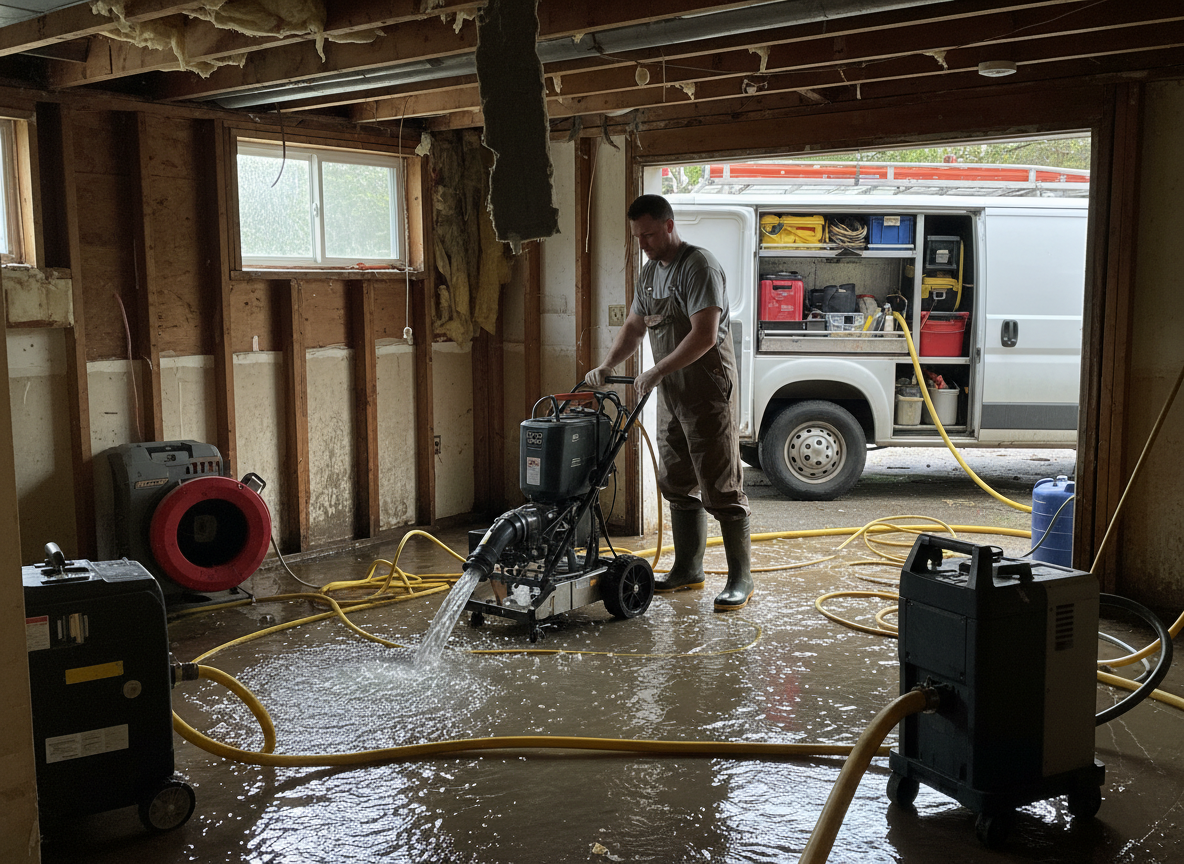
Marshall sits on Spokane's South Hill edge with a mix of 1950s–1970s ranch homes and older bungalows that sit on sloped lots. Winter snow loads followed by rapid thaws send water along foundations and into basements, especially where downspouts empty onto clay-heavy soil. Our crew at 4625 E Trent Ave reaches Marshall via the High Bridge corridor in under twenty minutes, bringing portable extractors sized for the narrow driveways common on 29th and Cannon.
Summer thunderstorms can overwhelm the aging storm drains along Marshall Avenue, pushing water into crawl spaces before it reaches the Spokane River. We map each job to the exact grade of the lot and the condition of the original clay tile drains that still serve many blocks here. Same-day drying prevents the musty odor that travels quickly through the connected basements typical in this pocket between Browne's Addition and the Perry District.
Around 30. Marshall
We regularly work near:
- 📍Marshall Avenue
- 📍29th Avenue
- 📍Cannon Street
- 📍High Bridge Park
- 📍Spokane River Trail access at Marshall
Water Damage Restoration in 30. Marshall — Local Notes
- •Mid-century homes along Marshall Avenue often have shallow crawl spaces with dirt floors that absorb snow-melt runoff from the uphill side of the block.
- •Narrow single-car driveways and tight turns onto 29th limit the size of dehumidifiers we can stage on site, so we bring extra smaller units and extend hoses from the street.
- •Proximity to the Spokane River means higher groundwater in spring; we test sump discharge points on every Marshall call before starting extraction.
- •South Hill slopes create one-way water flow toward the river; we place barriers on the downhill side of the foundation first to keep water from migrating to neighboring lots.